

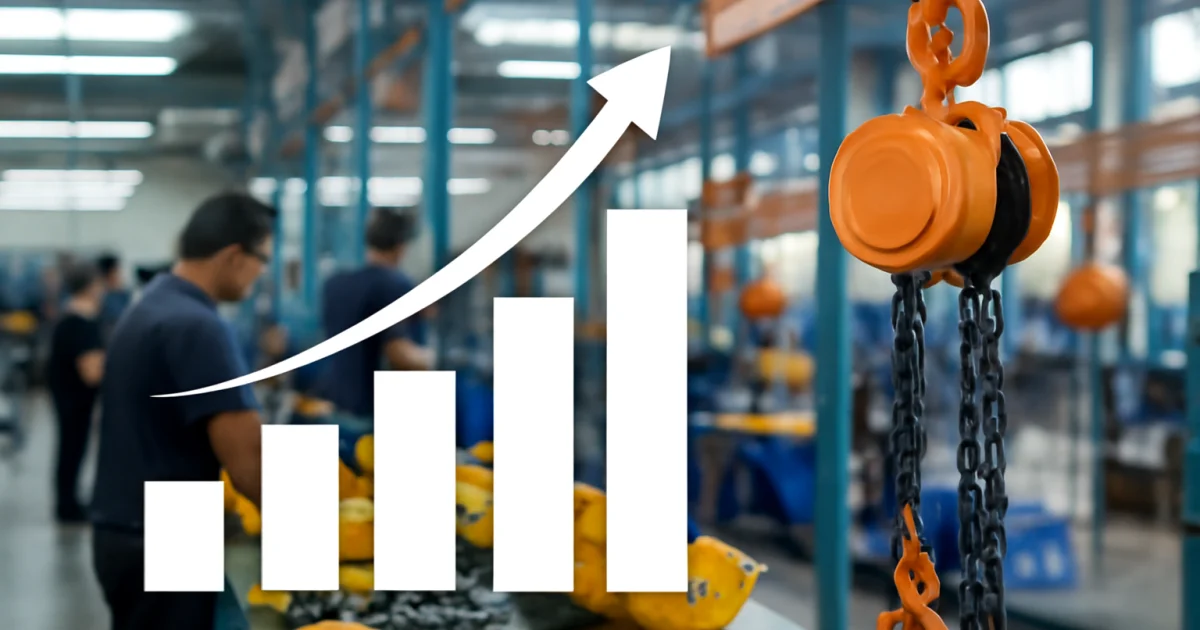
Key Statistics: Growth of Chain Hoist Usage in Malaysia’s Manufacturing Sector
The manufacturing sector in Malaysia is experiencing a significant transformation, driven by evolving industrial needs and the demand for efficient material handling solutions. Chain hoists, once considered a niche tool, have become essential across various industries, including automotive, steel, engineering, and warehouse operations. This article examines the key statistics, trends, and practical examples behind the remarkable growth of chain hoist usage in Malaysia’s manufacturing sector, providing actionable insights for decision-makers seeking to modernize their facilities.
The Rise of Chain Hoists in Malaysian Manufacturing
Malaysia’s manufacturing landscape has diversified over the past decade, with factories increasingly relying on automation and advanced material handling equipment. Chain hoists, known for their versatility and reliability, have seen a notable uptick in usage, especially in factories needing to lift heavy machinery, raw materials, and finished goods safely and efficiently.
Industry experts attribute this growth to several factors: the need to boost productivity, comply with stricter safety standards, reduce manual labor, and accommodate heavier or more complex manufacturing components. As manufacturing output grows, the integration of chain hoists and related lifting technologies has become a strategic priority for many plant operators.
Historical Perspective: From Manual Labor to Automation
Historically, material handling in Malaysia relied heavily on manual lifting or basic pulley systems. With the rapid evolution of local industries, especially since the early 2000s, manufacturers recognized the limitations and safety risks of manual processes. The gradual adoption of mechanical and electric hoists marked a turning point in workplace safety and efficiency. Today, chain hoists are seen as a critical investment for factories aiming to remain competitive and compliant with modern standards.
Major Drivers Behind Increased Chain Hoist Adoption
Several core factors are fueling the adoption of chain hoists in Malaysia’s manufacturing sector:
- Workforce Safety: Growing regulatory oversight and a focus on worker well-being have pushed factories to replace manual lifting with reliable hoisting systems.
- Production Efficiency: Electric chain hoists and automated crane systems speed up workflow, minimize bottlenecks, and enable seamless movement of goods.
- Equipment Versatility: Modern chain hoists accommodate a wide range of capacities, from lightweight assembly lines to heavy-duty steel fabrication.
- Cost Savings: Reduced labor costs, lower injury rates, and minimized downtime translate into measurable operational savings.
- Technological Integration: The rise of smart factories and Industry 4.0 initiatives has increased demand for hoisting equipment with advanced control systems and remote monitoring.
Safety and Compliance: A Growing Imperative
With Malaysia’s Department of Occupational Safety and Health (DOSH) intensifying inspections, manufacturing facilities are under increasing pressure to comply with stringent regulations. Chain hoists, especially those fitted with safety interlocks and overload protection, help organizations meet these requirements. Regular training and certification of personnel further minimize incidents and foster a culture of safety.
The Financial Equation: ROI in Material Handling Upgrades
While the upfront investment in chain hoist systems can be significant, many companies report a rapid return on investment (ROI). Reduced workplace injuries, fewer lost workdays, and lower insurance premiums offset the initial costs. Moreover, improved throughput and reduced bottlenecks contribute to higher revenue opportunities, especially in fast-paced industries like automotive and electronics.
Statistical Overview: Chain Hoist Malaysia Market Trends
While precise market size figures fluctuate annually, several consistent trends are evident in the Malaysian chain hoist market:
- Continuous year-on-year growth in demand for electric chain hoist systems, particularly in automotive and electronics manufacturing.
- Increased investment in overhead crane and gantry crane systems to support high-volume production.
- Significant uptake of goods hoists and wire rope hoist systems in warehouses and distribution centers, reflecting the growth of e-commerce and regional supply chains.
- Greater demand for regular maintenance, inspection, and operator training services as companies prioritize safety and compliance.
Manufacturers are also seeking solutions that integrate with existing infrastructure, minimizing downtime and streamlining upgrades—one reason why modular chain hoist systems are gaining popularity.
Market Growth in Numbers
According to industry reports, the chain hoist market in Malaysia has experienced annual growth rates of 8–10% over the past five years, outpacing the general industrial machinery sector. This growth is partly attributed to the expansion of logistics hubs and the modernization of older manufacturing plants. Projections indicate that the market will continue to grow as companies invest in smart automation and digital transformation.
Investment Patterns and Regional Differences
Investment in chain hoist systems is not uniform across Malaysia. Industrial regions such as Selangor, Penang, and Johor show the highest rates of adoption due to their concentration of factories and logistics centers. Meanwhile, emerging industrial parks in East Malaysia are beginning to integrate modern hoisting systems as part of greenfield developments, often with government incentives for technology upgrades.
Industry Breakdown: Key Sectors Driving Usage
The expansion of chain hoist usage is not uniform across all industries. The following sectors are leading adopters:
- Automotive Manufacturing: Factories use hoists for engine installation, body assembly, and component transfer, requiring precise and reliable lifting equipment. Read more about crane systems for automotive assembly lines.
- Steel and Metal Fabrication: Heavy workpieces, raw metal bars, and finished structures demand robust hoists and cranes for safe handling.
- Warehousing & Logistics: Goods hoists and material lifts support efficient inventory movement, especially in multi-level facilities.
- Electronics and Precision Manufacturing: Compact electric chain hoists are favored for sensitive, high-throughput environments.
- Engineering & Maintenance: Facility managers rely on chain hoists for routine maintenance, equipment installation, and emergency repairs.
These sectors are not only increasing their use of hoists but are also investing in advanced control systems, such as industrial remote controls, to further improve safety and efficiency.
Case Study: Automotive Sector Modernization
One leading automotive manufacturer in Malaysia recently undertook a comprehensive modernization of its assembly lines. By replacing outdated manual winches with electric chain hoists and integrating them with automated conveyors, the plant reduced assembly time per vehicle by 12% and reported a 40% decline in lifting-related injuries. This transformation underscores how chain hoists contribute directly to productivity and worker safety.
Warehousing: Responding to E-commerce
Warehousing and logistics providers are also at the forefront of hoist adoption. The surge in e-commerce has created demand for rapid order fulfillment and higher inventory turnover. Facilities that invest in modular goods hoists and overhead cranes can quickly adapt to seasonal peaks and handle diverse product sizes, giving them a competitive edge in the logistics market.
Technological Advancements in Hoisting Systems
Modern chain hoists and crane systems have evolved far beyond traditional manual models. Several technological innovations are shaping the market in Malaysia:
- Electric Chain Hoists: Offering higher lifting speed, smoother operation, and precise load control, these are increasingly standard in new installations.
- Wire Rope Hoists: Preferred for heavier loads and longer lifting heights, wire rope hoist systems are now equipped with advanced safety features and smart diagnostics.
- Remote Control Integration: Wireless controls reduce operator risk and enable more flexible equipment positioning.
- IoT & Data Analytics: Smart hoists provide real-time monitoring, predictive maintenance alerts, and usage analytics to minimize unplanned downtime.
This innovation is helping manufacturing companies meet higher production targets while maintaining stringent safety and efficiency standards.
Smart Hoists and Industry 4.0
With the emergence of Industry 4.0, smart hoists equipped with sensors and connectivity are enabling predictive maintenance and energy optimization. Manufacturers can monitor usage data, schedule maintenance proactively, and even automate load balancing across multiple hoists. This digital transformation reduces unexpected breakdowns and extends the usable life of lifting equipment.
Customization and Modular Design
Suppliers are now offering customizable chain hoist solutions tailored to industry-specific requirements. Modular designs allow factories to expand or reconfigure their material handling systems with minimal downtime. This adaptability is especially valuable for contract manufacturers or facilities with frequently changing production lines.
Benefits of Chain Hoist Adoption: Practical Examples
Manufacturers and facility managers across Malaysia report clear benefits from investing in chain hoists and related lifting systems:
- Reduced Workplace Injuries: Automated lifting significantly lowers the risk of musculoskeletal injuries among workers.
- Higher Throughput: Assembly lines and warehouses can move products more quickly, supporting greater output and faster order fulfillment.
- Enhanced Flexibility: Modular hoist systems allow facilities to adapt quickly to new product lines or changes in production volume.
- Long-Term Cost Efficiency: Preventive maintenance and high-quality equipment reduce repair costs and extend system lifespan.
For example, a mid-sized automotive parts manufacturer recently upgraded to electric chain hoists, achieving a significant reduction in manual labor and reporting a noticeable improvement in delivery turnaround time. Similarly, a logistics facility installed goods hoists to facilitate movement between floors, leading to more efficient inventory management.
Environmental and Ergonomic Advantages
Modern hoists are designed not only for performance but also for energy efficiency and ergonomics. Variable frequency drives and energy-saving motors reduce power consumption, while ergonomic control pendants decrease operator fatigue. Facilities that prioritize both productivity and worker comfort often see improved retention and lower absenteeism.
Common Mistakes and How to Avoid Them
- Underspecifying Equipment: Choosing a hoist with insufficient capacity for future needs can lead to costly replacements. Always account for potential growth when specifying load requirements.
- Neglecting Regular Maintenance: Skipping scheduled inspections increases the risk of breakdowns. Establish a preventive maintenance schedule and maintain accurate service records.
- Inadequate Operator Training: Even the best equipment is only as safe as its operator. Regularly train staff on safe handling practices and emergency procedures.
- Improper Integration: Failing to consider how new hoists will integrate with existing cranes or control systems can result in downtime or compatibility issues. Consult with suppliers about integration options early in the planning process.
Actionable Strategies for Manufacturing Leaders
For plant operators and facility managers considering investment in chain hoists or looking to upgrade existing systems, the following strategies can help maximize value:
- Assess Current and Future Needs: Estimate load capacities, lifting heights, and frequency of use to select the most suitable hoist system.
- Prioritize Safety Compliance: Ensure all equipment meets relevant safety standards and is subject to regular inspection and certification.
- Plan for Integration: Choose hoisting systems compatible with existing cranes, overhead structures, and control systems to minimize installation disruption.
- Invest in Training: Provide thorough operator training to maximize safety and efficiency.
- Establish Preventive Maintenance: Schedule regular servicing and utilize remote monitoring features to anticipate and resolve issues early.
Leveraging these strategies helps organizations unlock the full potential of their lifting equipment, supporting long-term growth and operational resilience.
Step-by-Step Checklist for Implementing a Chain Hoist System
- Conduct a load and workflow analysis to determine lifting requirements.
- Engage with reputable suppliers for site assessment and system recommendations.
- Review local safety regulations and ensure proposed systems are compliant.
- Develop an integration plan for new and existing equipment, involving IT and facilities teams as necessary.
- Schedule installation during planned shutdowns to minimize production impact.
- Train staff on safe operation and emergency procedures prior to system go-live.
- Implement a maintenance schedule and track equipment usage for ongoing optimization.
Looking Forward: Chain Hoist Malaysia Market Outlook
The outlook for chain hoist usage in Malaysia’s manufacturing sector remains strong. As industries invest in automation and advanced material handling, demand for electric chain hoist systems, wire rope hoists, overhead cranes, and related technologies is expected to continue rising.
Suppliers like chainhoist.com.my are central to this growth, offering a complete range of products and services—from installation and operator training to maintenance, refurbishment, and customized solutions for specific industry needs.
For businesses seeking to enhance production efficiency, improve safety, and future-proof their operations, now is the ideal time to consider the advantages of modern chain hoists and material handling systems. Explore further resources, such as the Guide to Chain Hoists: Types, Applications, and Maintenance, to make informed decisions tailored to your facility’s requirements.
Future Trends: Sustainability and Digitalization
Looking ahead, sustainability and digitalization are set to shape the next wave of growth in Chain Hoist Malaysia adoption. Manufacturers are increasingly prioritizing eco-friendly equipment—energy-efficient motors, recyclable materials, and systems designed for minimal environmental impact. Simultaneously, the integration of digital twins and cloud-based monitoring is enabling remote diagnostics and lifecycle management, ensuring that facilities remain agile and resilient in a dynamic industrial landscape.
Conclusion: Embracing the Next Era of Material Handling
Chain hoists have evolved from simple lifting tools to critical enablers of industrial productivity, safety, and flexibility. The key statistics and trends highlighted in this article showcase the pivotal role these systems play in Malaysia’s dynamic manufacturing sector. By embracing advanced hoisting technology and best practices, Malaysian manufacturers position themselves for sustainable growth in an increasingly competitive global market.
Frequently Asked Questions
Why are chain hoists becoming more popular in Malaysian manufacturing?
Chain hoists are gaining popularity due to their ability to improve workplace safety, boost production efficiency, and handle heavier or more complex loads. As manufacturing processes become more automated and labor regulations tighten, factories find chain hoists essential for maintaining productivity and compliance.
What is the difference between an electric chain hoist and a wire rope hoist?
An electric chain hoist typically uses a chain to lift lighter to medium loads with high precision and is favored for general manufacturing and assembly work. A wire rope hoist, on the other hand, is designed for heavier loads and longer lifting heights, making it ideal for heavy-duty industrial applications and overhead cranes.
How do overhead crane systems complement chain hoists in factories?
Overhead crane systems provide the horizontal movement needed to transport heavy items across the factory floor, while chain hoists handle the vertical lifting. Used together, they enable efficient and safe handling of materials, machinery, and products throughout the manufacturing process.
What are the key safety considerations when installing a chain hoist system?
Key safety considerations include ensuring the hoist is properly rated for the load, regular inspection and maintenance, operator training, adherence to safety standards, and the use of appropriate control systems (such as industrial remote controls) to minimize risks.
How can manufacturers maximize the lifespan of their chain hoist equipment?
Manufacturers can maximize equipment lifespan by scheduling preventive maintenance, investing in quality hoists from reputable suppliers, providing operator training, and utilizing smart monitoring features to detect issues before they lead to major breakdowns.
Upgrade Your Material Handling with chainhoist.com.my
Ready to modernize your manufacturing operations with reliable chain hoist, crane, and goods hoist solutions? chainhoist.com.my offers complete lifting systems, expert installation, 24-hour support, customized maintenance contracts, and technical guidance tailored to Malaysia’s industrial needs. Enhance safety, increase efficiency, and future-proof your facility today.